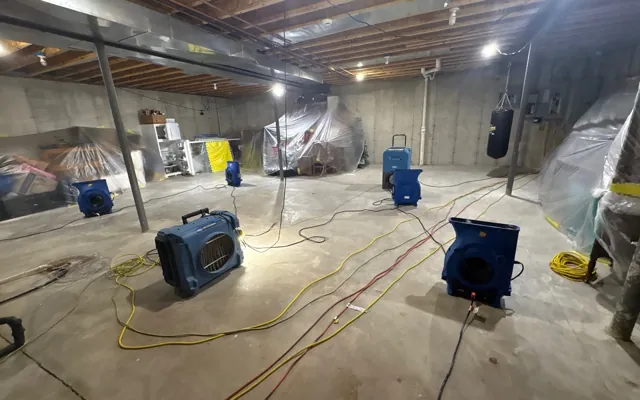
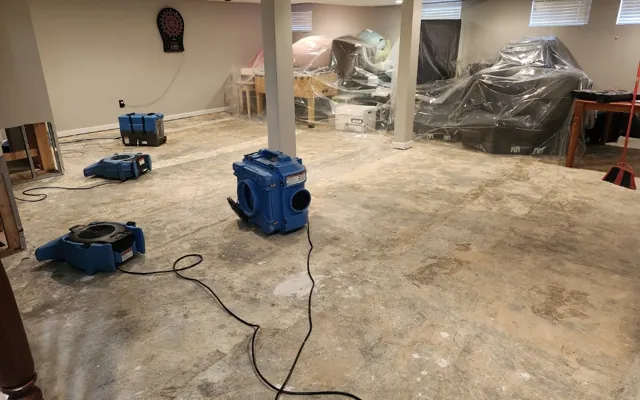
When a basement floods on Kiawah Island, SC, local crews respond fast to extract water and start drying, following IICRC-standard methods to protect a home's structure from lasting damage.

Technicians start by finding where the water entered and classifying its type. On Kiawah Island, they trace how far it spread into finished rooms or under the slab, which is critical for proper cleanup protocols.
Using powerful pumps and extractors, the crew removes all standing water. Fast removal is a priority here, as prolonged saturation can warp expensive finishes and promote mold in the humid coastal climate.
Air movers and dehumidifiers dry the structure thoroughly. The team verifies moisture levels in the slab and framing meet IICRC standards before closing the job, ensuring a stable base for any rebuild.

Cleanup for a flooded lowest level in Kiawah Island generally runs about $2,000 to $8,000, depending on how much water came in, how long it sat, whether the space is finished, and how much material has to be removed and rebuilt. Contaminated storm or tidal water costs more than a clean-water event. Outside flooding is usually covered only under a separate flood policy, and the loss is documented accordingly.
On Kiawah Island, many high-value homes face direct exposure to Atlantic storm surge and heavy rains. When a basement or lower level floods, especially in a seasonal or vacant property, the water can sit unnoticed, quickly threatening finishes, framing, and personal belongings stored below. Kiawah Island's low-lying, hurricane-exposed geography means storm surge and tidal flooding are constant risks. Heavy seasonal vacancy can also let leaks from appliances or plumbing go unchecked until a significant amount of water has accumulated in the lowest level. From Kiawah Island, crews also cover nearby Goose Creek, Hanahan, Folly Beach, Isle of Palms, Johns Island, Park Circle. See every neighborhood and town on the full service area page.
See all areas servedEvery loss is photographed, measured, and logged from the first visit, so the paperwork holds up with your insurance carrier.
Technicians follow recognized IICRC drying standards and prove the work with daily moisture readings, not guesswork.
Emergency dispatch any hour of the day or night, with a real crew on the way, not a callback in the morning.
A real crew dispatched any hour, not a callback in the morning.
Trained technicians following recognized IICRC drying standards.
Truck-mounted, portable, and submersible for any size loss.
The loss is documented and billed to the carrier directly.
Standard policies often cover sudden, accidental water events like a burst pipe. However, outside flooding from storms or tidal surge typically requires a separate flood insurance policy. Local crews document the source and category of water to support the correct claim.
The humid coastal climate of Kiawah Island, SC, can extend drying times. For a typical job, active drying with professional equipment takes 3 to 5 days, followed by verification that all structural materials have reached a safe moisture content.
Crews are on call 24 hours a day and can be on the way to Kiawah Island within the hour.
Call (843) 701-9240