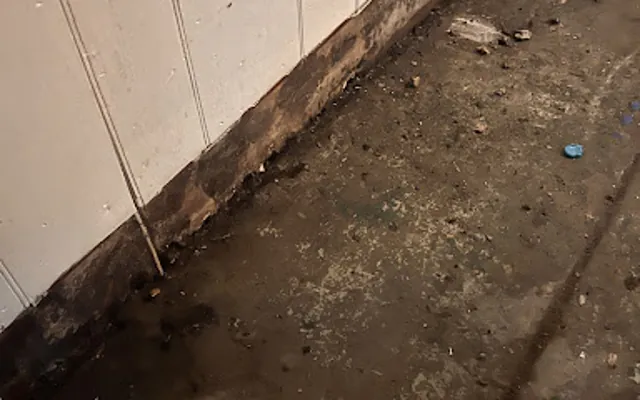
A sewage backup is a category 3 health hazard that needs trained handling, not a mop. Charleston crews respond around the clock, removing black water safely, sanitizing the space, and drying it to IICRC standards, reaching most Lowcountry homes in about an hour.

The crew sets up containment, wears protective equipment, and shuts off contributing fixtures so the contaminated area is isolated from the rest of the home.
Specialized pumps and extractors remove the sewage and standing water, and saturated porous materials are bagged and removed for disposal.
Every affected surface is cleaned and treated with hospital-grade antimicrobial products to kill bacteria and eliminate contamination.
Air movers and dehumidifiers dry the structure to a moisture-verified target, and the space is confirmed safe before any rebuild begins.

While help is on the way, these first steps, done only where it is safe, limit the damage and protect the insurance claim.
Shut the supply off at the source, or close the home's main valve if the source is not obvious. Stopping the flow limits the damage more than anything else.
Switch off electricity to the affected area, but only if the breaker can be reached without standing in or touching the water.
Get a crew dispatched right away. The sooner extraction and drying begin, the more flooring, drywall, and belongings can be saved.
Take photos and a short video of the water and the affected rooms before anything is moved, so the insurance claim starts strong.
Sewage backup cleanup in Charleston typically runs about $2,000 to $8,000, depending on how far the black water spread, how much contaminated material has to be removed, and whether flooring and drywall need rebuilding. A backup confined to a bathroom costs far less than one that reaches finished rooms. Sudden sewer backups are often covered when a policy carries a backup endorsement, and the loss is documented for the adjuster.
Crews reach Charleston and the Lowcountry fast, from the peninsula and Wagener Terrace to West Ashley, James Island, and Johns Island, plus nearby Mount Pleasant, North Charleston, and the barrier islands. See the full list on the areas served across Charleston page.
See all areas servedEvery loss is photographed, measured, and logged from the first visit, so the paperwork holds up with your insurance carrier.
Technicians follow recognized IICRC drying standards and prove the work with daily moisture readings, not guesswork.
Emergency dispatch any hour of the day or night, with a real crew on the way, not a callback in the morning.
A real crew dispatched any hour, not a callback in the morning.
Trained technicians following recognized IICRC drying standards.
Truck-mounted, portable, and submersible for any size loss.
The loss is documented and billed to the carrier directly.
No. Sewage is category 3 black water carrying bacteria and viruses, and cleaning it without protective equipment and containment risks illness and spreads contamination through the home. Trained crews isolate the area, remove contaminated material safely, and disinfect before drying.
Porous materials that absorb contaminated water, carpet, padding, drywall, insulation, and many contents, usually cannot be disinfected reliably and are removed and disposed of. Hard, non-porous surfaces like tile and sealed concrete can generally be cleaned, sanitized, and kept.
Standard policies often exclude sewer backups unless a backup or drain endorsement was added, though sudden events are more likely to be covered. Coverage varies, so the loss is documented in full, with photos and moisture readings, to support whatever coverage applies.
Extraction and disinfection usually take a day, and structural drying runs several days after that, verified with moisture readings. Rebuilding removed flooring and drywall comes afterward and depends on the scope of the damage.
Charleston crews are on call 24 hours a day, local and fast, and can be on the way within the hour.
Call (843) 701-9240