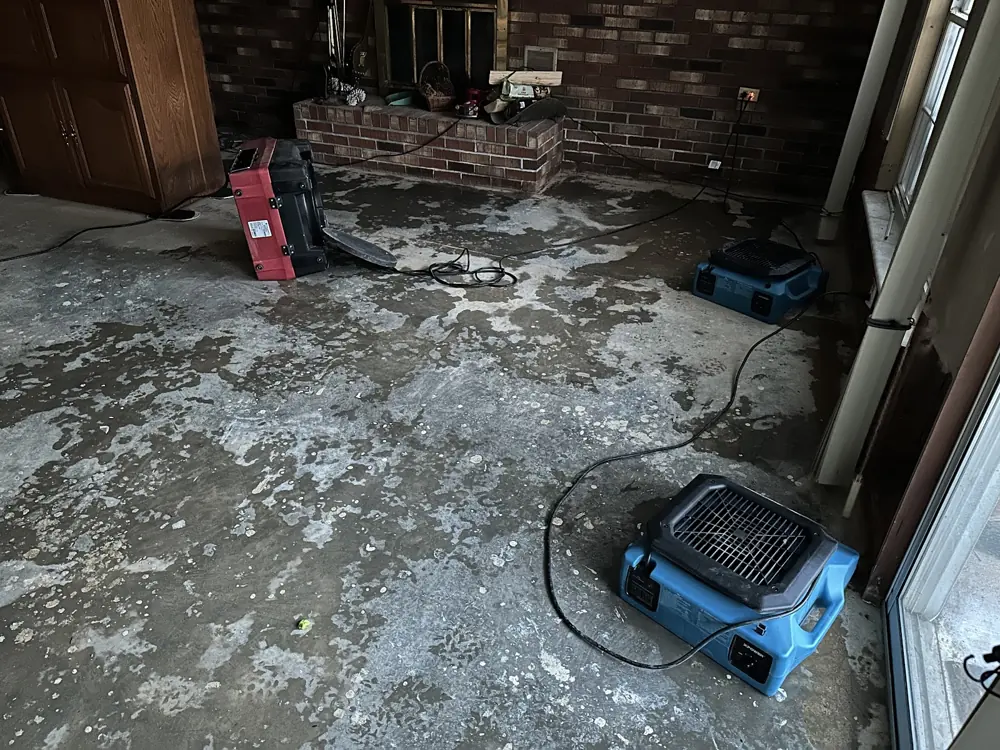
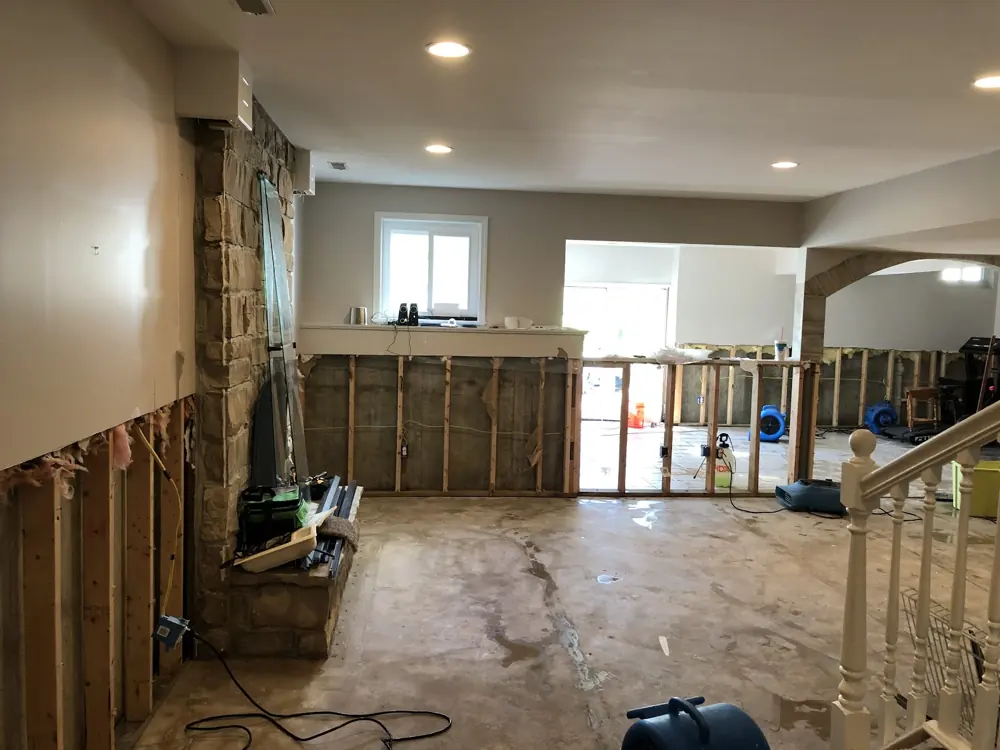
A Charleston garage floods from storm water at the door, a failed water heater, or seepage through the slab. Local crews extract the water and dry the space and anything stored in it, responding 24/7 and reaching most Lowcountry homes in about an hour.

The crew identifies the source, storm water, appliance leak, or seepage, classifies the water, and maps how far it spread.
Standing water is extracted from the slab and any adjoining space, and soaked belongings are moved and assessed.
Air movers and dehumidifiers dry the slab, walls, and shared framing to a moisture-verified target.
Contaminated storm water is sanitized, and damaged drywall and materials are restored once the area reads dry.

While help is on the way, these first steps, done only where it is safe, limit the damage and protect the insurance claim.
Shut the supply off at the source, or close the home's main valve if the source is not obvious. Stopping the flow limits the damage more than anything else.
Switch off electricity to the affected area, but only if the breaker can be reached without standing in or touching the water.
Get a crew dispatched right away. The sooner extraction and drying begin, the more flooring, drywall, and belongings can be saved.
Take photos and a short video of the water and the affected rooms before anything is moved, so the insurance claim starts strong.
Garage water damage cleanup in Charleston generally runs about $600 to $3,500, depending on how much water came in, whether it was clean or contaminated, whether it reached finished walls or adjoining rooms, and how much material has to be dried or replaced. Storm and tidal flooding may fall under a separate flood policy, so the loss is documented for whichever coverage applies.
Crews reach Charleston and the Lowcountry fast, from the peninsula and Wagener Terrace to West Ashley, James Island, and Johns Island, plus nearby Mount Pleasant, North Charleston, and the barrier islands. See the full list on the areas served across Charleston page.
See all areas servedEvery loss is photographed, measured, and logged from the first visit, so the paperwork holds up with your insurance carrier.
Technicians follow recognized IICRC drying standards and prove the work with daily moisture readings, not guesswork.
Emergency dispatch any hour of the day or night, with a real crew on the way, not a callback in the morning.
A real crew dispatched any hour, not a callback in the morning.
Trained technicians following recognized IICRC drying standards.
Truck-mounted, portable, and submersible for any size loss.
The loss is documented and billed to the carrier directly.
The garage sits at grade with a door that opens to the outside, so storm runoff and tidal flooding push in under it, and the slab seeps when the water table rises. On low-lying Charleston lots this is common, which is why extraction and drying of the slab and walls matter.
Yes. Water in the garage soaks belongings, wicks into drywall, and spreads into any shared wall or ceiling with the living space, where it feeds mold in the humidity. Drying the slab, walls, and framing to a verified level prevents a larger problem.
An appliance leak like a water heater in the garage is usually a covered homeowner claim, while storm or tidal flooding from outside generally falls under a separate flood policy. The loss is documented so you can submit to the right coverage.
Non-porous items can usually be cleaned and dried, while porous belongings soaked by contaminated storm water may not be salvageable. The crew moves and assesses the contents and dries what can be saved as part of the job.
Charleston crews are on call 24 hours a day, local and fast, and can be on the way within the hour.
Call (843) 701-9240