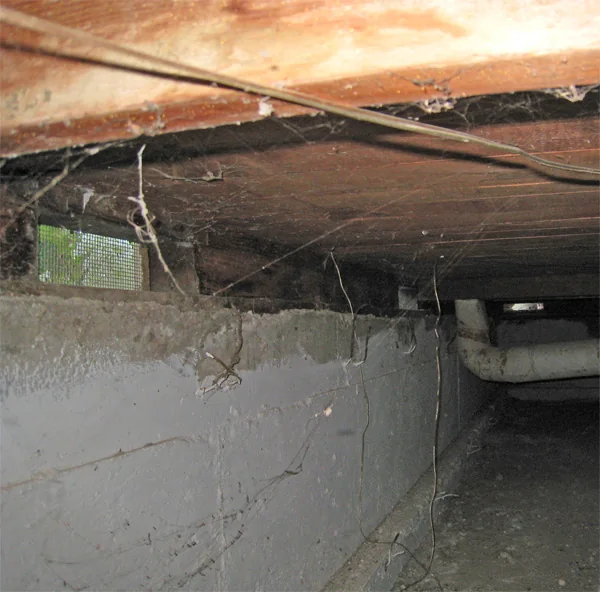
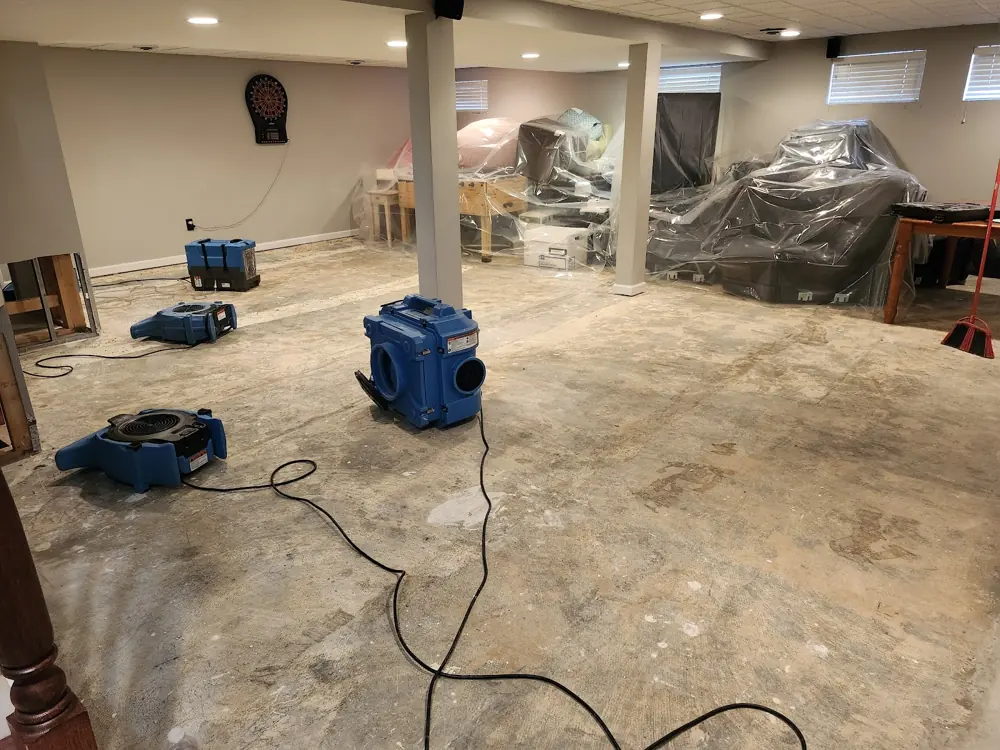
Most Charleston homes sit over a crawlspace, and that is exactly where Lowcountry water collects. Local crews pump out standing water, dry the framing, and control the humidity, responding 24/7 and reaching most addresses in about an hour, working to IICRC standards.

The crew assesses standing water, the vapor barrier, and the framing, and identifies whether the water came from groundwater, a leak, or storm intrusion.
Submersible pumps and extractors clear the standing water from the crawlspace down to a damp surface, and saturated debris is removed.
Air movers and dehumidifiers dry the joists, subfloor, and soil surface to a moisture-verified target, controlling the humidity that feeds mold.
Affected framing is treated as needed, and vapor-barrier and drainage issues are flagged so the space is less likely to flood again.

While help is on the way, these first steps, done only where it is safe, limit the damage and protect the insurance claim.
Shut the supply off at the source, or close the home's main valve if the source is not obvious. Stopping the flow limits the damage more than anything else.
Switch off electricity to the affected area, but only if the breaker can be reached without standing in or touching the water.
Get a crew dispatched right away. The sooner extraction and drying begin, the more flooring, drywall, and belongings can be saved.
Take photos and a short video of the water and the affected rooms before anything is moved, so the insurance claim starts strong.
Crawlspace water removal in Charleston typically runs about $1,000 to $5,000, depending on how much water is standing, how tight the access is, how much framing has to be dried and treated, and whether a vapor barrier needs replacing. Recurring groundwater problems that call for added drainage cost more. When the water came from a sudden covered event, the loss is documented for the adjuster.
Crews reach Charleston and the Lowcountry fast, from the peninsula and Wagener Terrace to West Ashley, James Island, and Johns Island, plus nearby Mount Pleasant, North Charleston, and the barrier islands. See the full list on the areas served across Charleston page.
See all areas servedEvery loss is photographed, measured, and logged from the first visit, so the paperwork holds up with your insurance carrier.
Technicians follow recognized IICRC drying standards and prove the work with daily moisture readings, not guesswork.
Emergency dispatch any hour of the day or night, with a real crew on the way, not a callback in the morning.
A real crew dispatched any hour, not a callback in the morning.
Trained technicians following recognized IICRC drying standards.
Truck-mounted, portable, and submersible for any size loss.
The loss is documented and billed to the carrier directly.
Almost never. The high water table and low, tidal ground make basements impractical here, so homes are built on raised or crawlspace foundations. That crawlspace is usually where water collects, which is why pumping and drying it properly matters so much.
Common causes are a rising water table after heavy rain, king-tide and storm intrusion, poor exterior drainage, a torn vapor barrier, or a plumbing leak under the house. The crew identifies which it is so the fix addresses the real source, not just the standing water.
Yes. Moisture and mold under the house drift up through floor gaps and registers, creating musty odors and poorer air upstairs. Drying the crawlspace and controlling its humidity improves the air in the living space above it.
After the water is pumped out, drying the joists, subfloor, and soil surface usually takes several days, tracked with moisture readings. Tight access and a high outdoor humidity can extend it, so equipment runs until the numbers confirm dry.
Charleston crews are on call 24 hours a day, local and fast, and can be on the way within the hour.
Call (843) 701-9240