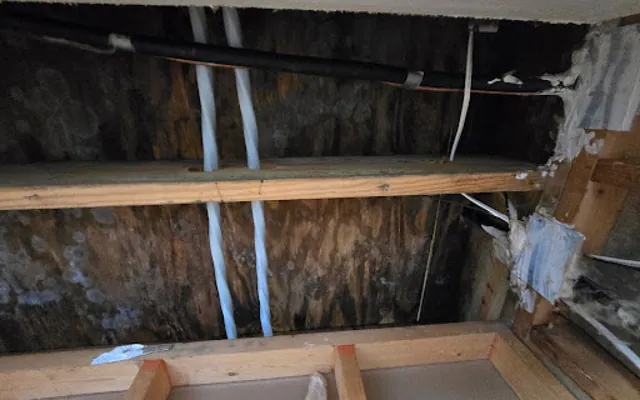
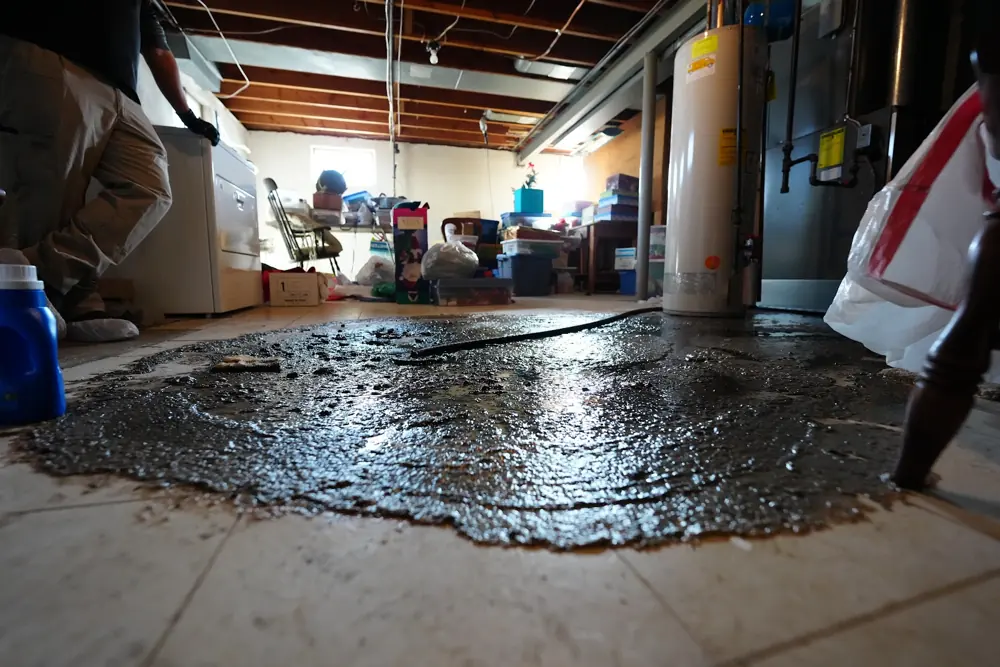
Ice dams are very rare on the warm Charleston coast, but a hard freeze after wet weather can still back water under shingles on the odd cold day. Local crews dry the roof edge and ceilings when it happens, responding 24/7 and working to IICRC standards.

The crew inspects the roof edge, gutters, and attic to confirm whether the water backed up from ice or entered as a storm leak, and maps the wet area.
Water backed into the roof edge, attic, and ceiling cavities is drained and extracted before it spreads further inside.
Air movers and dehumidifiers dry the sheathing, insulation, and ceiling drywall to a moisture-verified target.
Wet insulation and drywall are removed and restored once dry, and any roof or gutter issue is flagged for repair.

While help is on the way, these first steps, done only where it is safe, limit the damage and protect the insurance claim.
Shut the supply off at the source, or close the home's main valve if the source is not obvious. Stopping the flow limits the damage more than anything else.
Switch off electricity to the affected area, but only if the breaker can be reached without standing in or touching the water.
Get a crew dispatched right away. The sooner extraction and drying begin, the more flooring, drywall, and belongings can be saved.
Take photos and a short video of the water and the affected rooms before anything is moved, so the insurance claim starts strong.
Ice dam water damage cleanup in Charleston generally runs about $1,000 to $4,500 on the rare occasion it occurs, depending on how much roof edge, attic, and ceiling soaked through and how much material has to be dried or replaced. Because these events are so uncommon here, most winter roof leaks turn out to be wind-driven rain. Sudden covered leaks are documented for your insurance carrier.
Crews reach Charleston and the Lowcountry fast, from the peninsula and Wagener Terrace to West Ashley, James Island, and Johns Island, plus nearby Mount Pleasant, North Charleston, and the barrier islands. See the full list on the areas served across Charleston page.
See all areas servedEvery loss is photographed, measured, and logged from the first visit, so the paperwork holds up with your insurance carrier.
Technicians follow recognized IICRC drying standards and prove the work with daily moisture readings, not guesswork.
Emergency dispatch any hour of the day or night, with a real crew on the way, not a callback in the morning.
A real crew dispatched any hour, not a callback in the morning.
Trained technicians following recognized IICRC drying standards.
Truck-mounted, portable, and submersible for any size loss.
The loss is documented and billed to the carrier directly.
Almost never. The coast is too warm and its winters too mild to build the sustained ice and snow an ice dam needs. On the very rare hard freeze after wet weather it is possible, but most winter roof leaks here turn out to be wind-driven rain instead.
The crew inspects the roof edge, gutters, and attic to tell the difference. In Charleston the honest answer is usually a storm leak or worn flashing rather than ice, and identifying the true source is what makes the repair last.
Yes. Whether the water backed up from rare ice or entered as a storm leak, the response is the same: extract the trapped water, dry the roof edge, attic, and ceilings to a verified level, and restore the interior once dry.
Sudden water damage from a rare ice event or a storm leak is often covered, while damage from a worn-out roof neglected over time may not be. The loss is documented with photos and moisture readings so the claim is supported where coverage applies.
Charleston crews are on call 24 hours a day, local and fast, and can be on the way within the hour.
Call (843) 701-9240