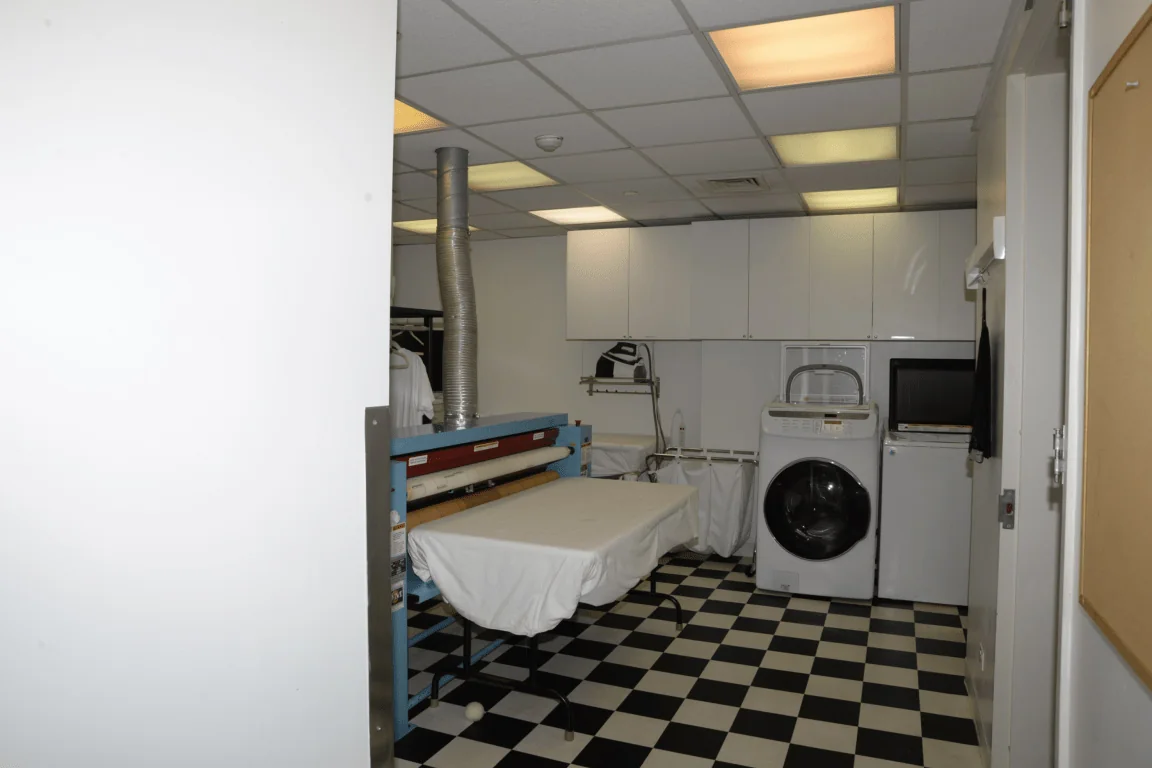
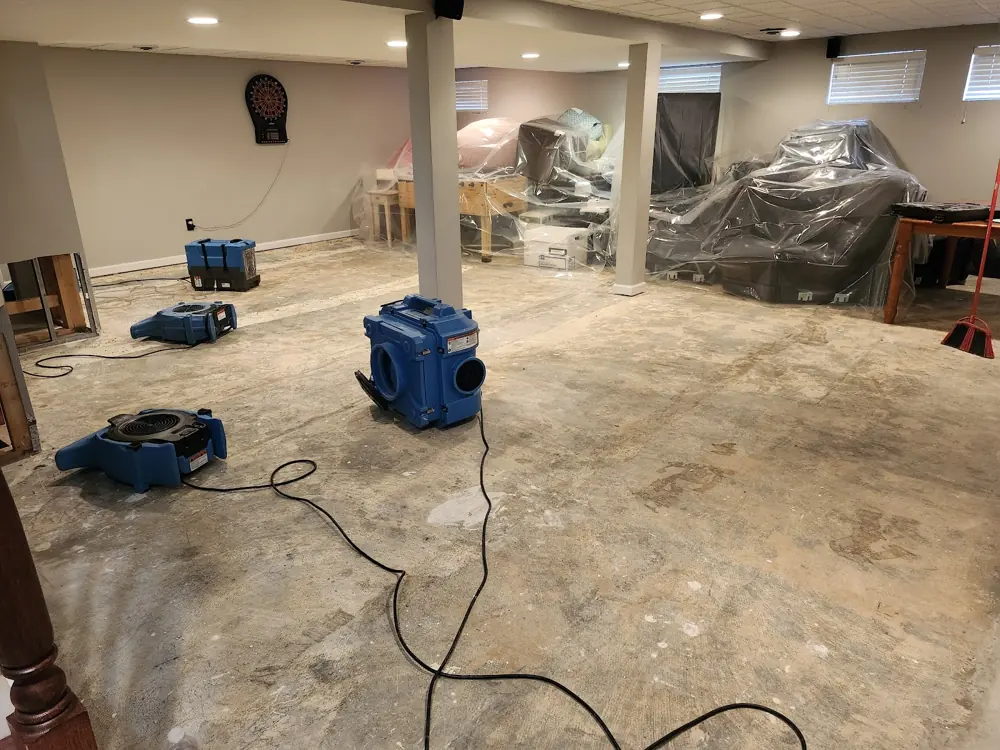
A burst washer hose or an overflowing machine can put dozens of gallons on the floor in minutes. Charleston crews extract the water and dry the structure fast, responding 24/7 and reaching most Lowcountry homes in about an hour, working to IICRC standards.

The crew shuts off the supply, classifies the water, and maps how far it spread into adjoining rooms and any ceiling below.
Standing and absorbed water is pulled from the floor, walls, and subfloor down to a damp surface.
Air movers and dehumidifiers dry the flooring, walls, and ceilings below to a moisture-verified target.
Soaked materials that cannot be dried are removed and restored once the area reads dry, and the failed hose is replaced.

While help is on the way, these first steps, done only where it is safe, limit the damage and protect the insurance claim.
Shut the supply off at the source, or close the home's main valve if the source is not obvious. Stopping the flow limits the damage more than anything else.
Switch off electricity to the affected area, but only if the breaker can be reached without standing in or touching the water.
Get a crew dispatched right away. The sooner extraction and drying begin, the more flooring, drywall, and belongings can be saved.
Take photos and a short video of the water and the affected rooms before anything is moved, so the insurance claim starts strong.
Washing machine overflow cleanup in Charleston generally runs about $600 to $3,500, depending on how long the water ran, how far it spread, whether it reached a ceiling below, and how much material has to be dried or replaced. A quick catch costs far less than a hose that burst while the family was out. Sudden failures are often a covered claim, documented for the adjuster.
Crews reach Charleston and the Lowcountry fast, from the peninsula and Wagener Terrace to West Ashley, James Island, and Johns Island, plus nearby Mount Pleasant, North Charleston, and the barrier islands. See the full list on the areas served across Charleston page.
See all areas servedEvery loss is photographed, measured, and logged from the first visit, so the paperwork holds up with your insurance carrier.
Technicians follow recognized IICRC drying standards and prove the work with daily moisture readings, not guesswork.
Emergency dispatch any hour of the day or night, with a real crew on the way, not a callback in the morning.
A real crew dispatched any hour, not a callback in the morning.
Trained technicians following recognized IICRC drying standards.
Truck-mounted, portable, and submersible for any size loss.
The loss is documented and billed to the carrier directly.
Shut off the water at the valves behind the machine if you can reach them safely, which stops the full-flow water. Then call, the crew extracts the water and dries the structure, and replaces the failed hose so it does not burst again.
A lot, and fast. The fill hoses are under constant pressure, so a burst releases water at full flow until the supply is shut off. An unattended burst can put hundreds of gallons across the floor and into adjoining rooms.
Sudden hose failures and overflows and the resulting water damage are usually covered by a standard homeowner policy. A slow, long-ignored leak may be excluded. The loss is documented with photos and moisture readings to support the claim.
Replacing rubber fill hoses with braided steel lines, replacing them every few years, and shutting the valves when you travel all cut the risk. During the cleanup the failed hose is replaced so the same connection does not fail right away.
Charleston crews are on call 24 hours a day, local and fast, and can be on the way within the hour.
Call (843) 701-9240