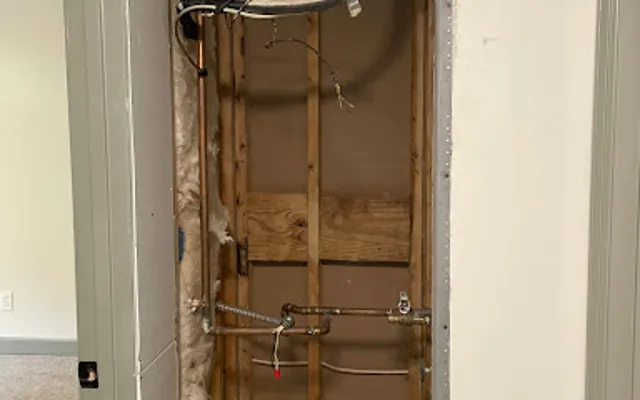
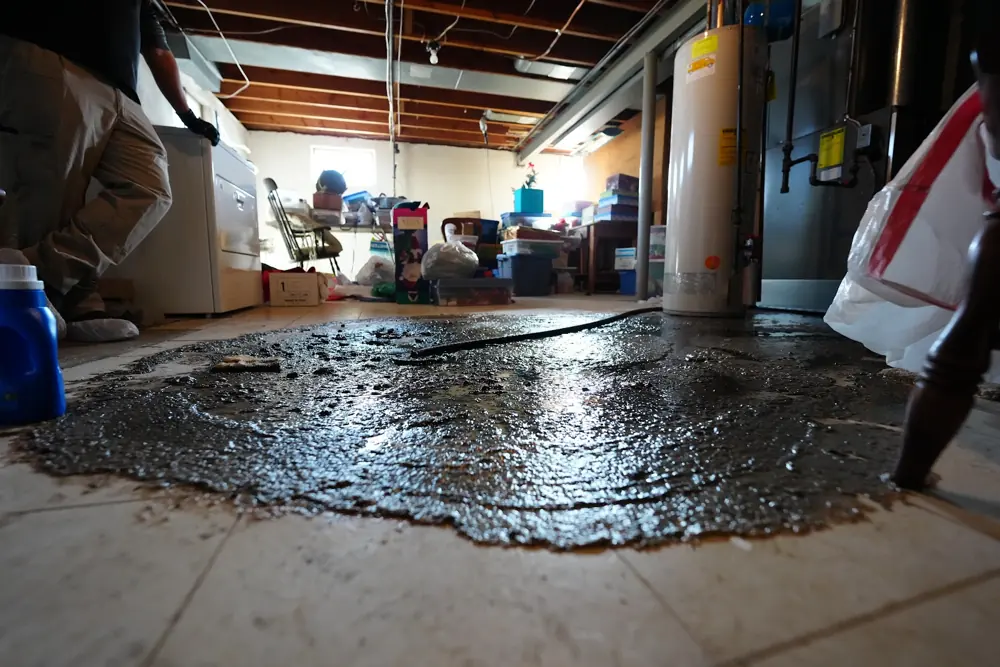
A burst supply line can run for hours behind a wall before anyone notices. Charleston crews shut off the water, extract it, and dry the walls and floors it reached, responding 24/7 and reaching most Lowcountry homes in about an hour, working to IICRC standards.

The crew stops the water at the fixture or main, then traces how far it traveled with moisture meters and thermal imaging behind walls and under floors.
Truck-mounted and portable extractors pull standing and absorbed water from floors, cavities, and any crawlspace the line drained into.
Wet drywall is flood-cut where needed to reach hidden moisture, and air movers and dehumidifiers dry the framing and floor to a verified target.
Once the numbers confirm dry, drywall, baseboards, paint, and flooring are put back so the room looks the way it did before the pipe let go.

While help is on the way, these first steps, done only where it is safe, limit the damage and protect the insurance claim.
Shut the supply off at the source, or close the home's main valve if the source is not obvious. Stopping the flow limits the damage more than anything else.
Switch off electricity to the affected area, but only if the breaker can be reached without standing in or touching the water.
Get a crew dispatched right away. The sooner extraction and drying begin, the more flooring, drywall, and belongings can be saved.
Take photos and a short video of the water and the affected rooms before anything is moved, so the insurance claim starts strong.
Burst pipe cleanup in Charleston generally runs about $1,000 to $4,000, depending on how long the line ran, how far the water spread, and how much wall and flooring has to be opened and dried. A quick catch in a single room costs far less than a line that ran overnight into several rooms. Sudden pipe bursts are typically a covered homeowner claim, and the loss is documented for the adjuster.
Crews reach Charleston and the Lowcountry fast, from the peninsula and Wagener Terrace to West Ashley, James Island, and Johns Island, plus nearby Mount Pleasant, North Charleston, and the barrier islands. See the full list on the areas served across Charleston page.
See all areas servedEvery loss is photographed, measured, and logged from the first visit, so the paperwork holds up with your insurance carrier.
Technicians follow recognized IICRC drying standards and prove the work with daily moisture readings, not guesswork.
Emergency dispatch any hour of the day or night, with a real crew on the way, not a callback in the morning.
A real crew dispatched any hour, not a callback in the morning.
Trained technicians following recognized IICRC drying standards.
Truck-mounted, portable, and submersible for any size loss.
The loss is documented and billed to the carrier directly.
If you can safely reach the fixture valve or the main shutoff, closing it stops more water from feeding the damage, which helps a lot. If you cannot reach it safely, leave it and call, the crew will shut it down on arrival and start extraction right away.
Yes. Water that wicks into wall cavities and subfloor stays wet in the coastal humidity and can begin growing mold within 24 to 48 hours. That is why hidden moisture is mapped and dried, not just the water you can see on the floor.
Sudden, accidental pipe bursts are usually covered by a standard homeowner policy, including the resulting water damage. Slow leaks that were neglected over time are often excluded. The loss is documented with photos and moisture readings so the claim is well supported.
Most burst-pipe losses dry in three to five days once extraction is done, verified with daily moisture readings before the equipment comes out. Restoration of any opened drywall and flooring comes afterward and depends on the scope.
Charleston crews are on call 24 hours a day, local and fast, and can be on the way within the hour.
Call (843) 701-9240