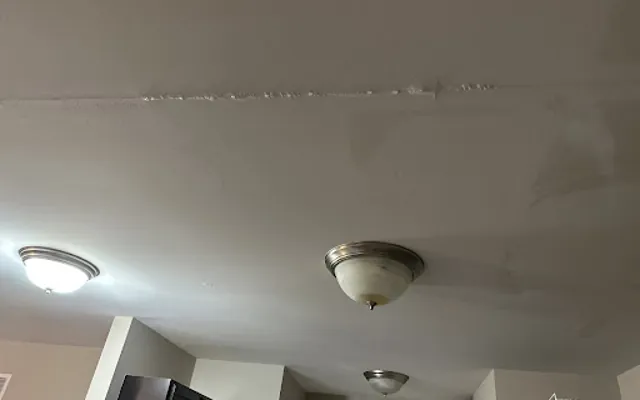
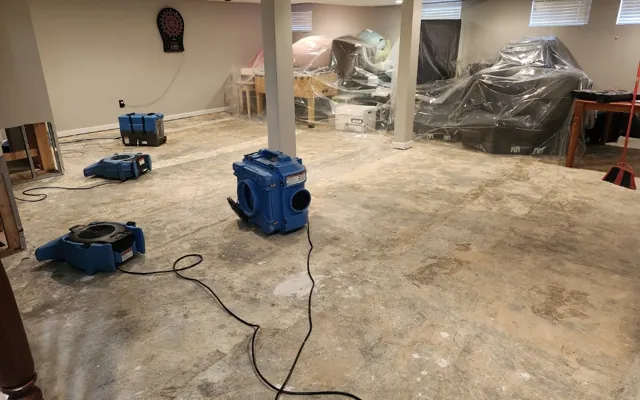
Kiawah Island, SC ceiling water damage gets fast, local response. Crews follow IICRC-standard methods to stop leaks, dry cavities, and restore ceilings, focusing on the unique challenges of high-value barrier island homes.

On Kiawah Island, technicians first find the water source, whether a roof leak from recent storms or a failed plumbing line in a vacant home. Stopping the flow is the critical first step before any drying begins.
The crew safely drains any pooled water. They then use air movers and dehumidifiers to dry the ceiling cavity, insulation, and framing, following IICRC standards for the island's humid air. Wet insulation is removed if it cannot be saved.
Once moisture meters confirm everything is dry, damaged drywall is replaced. The team finishes and paints the new ceiling to blend seamlessly with the existing surface, a key concern for property value on Kiawah Island.

Ceiling water damage repair in Kiawah Island generally runs about $600 to $3,500, depending on how large the wet area is, whether framing and insulation soaked through, and how much drywall has to be replaced and refinished. A small stain caught early costs far less than a collapsed section over a whole room. When the source is a sudden, covered event, the loss is documented for your insurance carrier.
On a humid, hurricane-exposed barrier island like Kiawah Island, SC, ceiling water damage is a persistent threat. Storm surge, coastal humidity, and plumbing issues in high-value second homes or seasonal rentals can lead to hidden leaks that worsen over weeks, threatening insulation, framing, and finishes. The resulting stains and sagging demand a specific approach. Kiawah Island's coastal climate brings heavy rain, tropical storms, and high humidity. Combined with storm-surge exposure and periods of vacancy in many homes, small roof leaks or plumbing issues can soak ceiling cavities long before a stain appears downstairs. From Kiawah Island, crews also cover nearby Goose Creek, Hanahan, Folly Beach, Isle of Palms, Johns Island, Park Circle. See every neighborhood and town on the full service area page.
See all areas servedEvery loss is photographed, measured, and logged from the first visit, so the paperwork holds up with your insurance carrier.
Technicians follow recognized IICRC drying standards and prove the work with daily moisture readings, not guesswork.
Emergency dispatch any hour of the day or night, with a real crew on the way, not a callback in the morning.
A real crew dispatched any hour, not a callback in the morning.
Trained technicians following recognized IICRC drying standards.
Truck-mounted, portable, and submersible for any size loss.
The loss is documented and billed to the carrier directly.
Drying a ceiling cavity typically takes two to four days, but Kiawah Island's high humidity can extend that timeline. Local crews monitor moisture levels closely with meters and adjust equipment until materials meet the dry standard.
Coverage depends on the policy and the source of the water. Sudden, accidental events like a burst pipe are often covered. Local crews document the damage and cause thoroughly, which helps with the insurance claim process common for Kiawah Island properties.
Crews are on call 24 hours a day and can be on the way to Kiawah Island within the hour.
Call (843) 701-9240