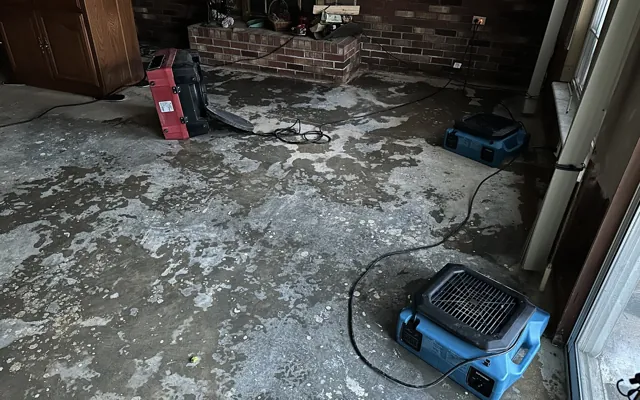
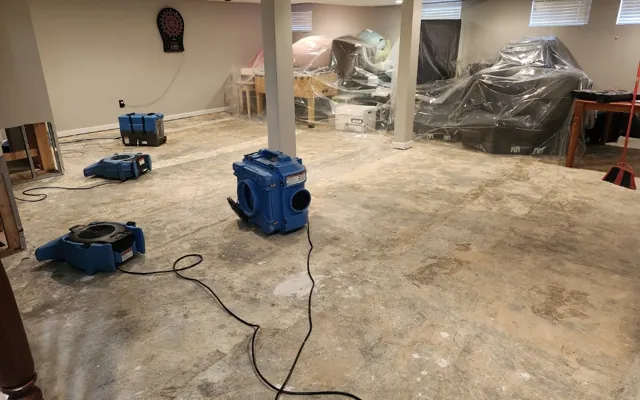
For James Island, SC homes hit by a hurricane surge or king tide backflow, a rapid local crew response can limit structural harm. Technicians follow IICRC-standard methods to extract water and document damage for the insurance process.

Technicians first check for electrical issues in the wet area and classify the water type. They document all damage from the James Island storm, creating a detailed record for the homeowner's flood insurance claim.
Using submersible pumps, crews clear the standing floodwater from the home. Saturated sheetrock, mud, and debris from the tidal surge are then removed from the property and hauled away for disposal.
Surfaces touched by contaminated floodwater are cleaned with antimicrobial solutions. Industrial air movers and dehumidifiers then target the framing and subfloor, with daily moisture readings taken until a dry standard is met.

Storm and flood cleanup in James Island generally runs about $2,500 to $8,000 or more, driven by how deep the water was, how long it sat, how much contaminated material has to be removed, and the size of the affected area. Barrier-island and peninsula homes with surge exposure can run higher. Outside flooding is usually covered only under a separate flood policy, so the loss is fully documented for whichever coverage applies.
In the established neighborhoods of James Island, SC, homeowner properties sit low among the tidal marshes. Heavy summer rains on this flat land often leave standing water in yards and crawlspaces, while high tide events can push harbor water back through storm drains, threatening home interiors and foundations. James Island's low grade and tidal location mean heavy rain pools instead of draining away. Seasonal king tides often cause saltwater to backflow through street drains, and the humid subtropical climate allows standing water to quickly fuel mold in wall systems. From James Island, crews also cover nearby Avondale, West Ashley, Wagener Terrace, Mount Pleasant, Sullivan's Island, North Charleston. See every neighborhood and town on the full service area page.
See all areas servedEvery loss is photographed, measured, and logged from the first visit, so the paperwork holds up with your insurance carrier.
Technicians follow recognized IICRC drying standards and prove the work with daily moisture readings, not guesswork.
Emergency dispatch any hour of the day or night, with a real crew on the way, not a callback in the morning.
A real crew dispatched any hour, not a callback in the morning.
Trained technicians following recognized IICRC drying standards.
Truck-mounted, portable, and submersible for any size loss.
The loss is documented and billed to the carrier directly.
Typically, no. Damage from external flooding, like tidal surge or street backflow in James Island, usually requires a separate flood insurance policy. Local crews document the loss thoroughly to support whichever coverage applies, as standard homeowners policies often exclude this type of water.
The humid coastal climate can extend drying time. For a typical James Island job with several inches of water, the intensive drying phase often takes three to five days. Technicians use daily moisture meter readings to verify when framing and subfloors meet the dry standard.
Crews are on call 24 hours a day and can be on the way to James Island within the hour.
Call (843) 701-9240