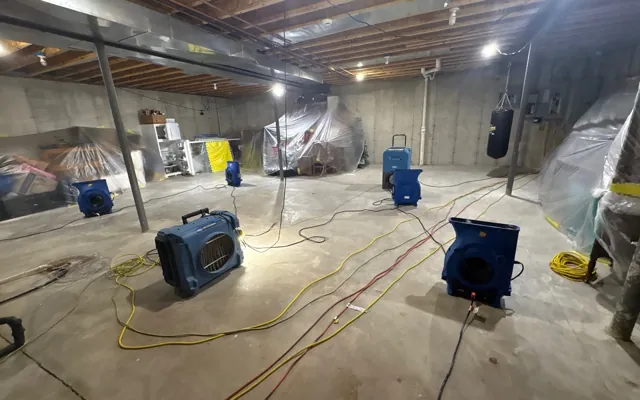
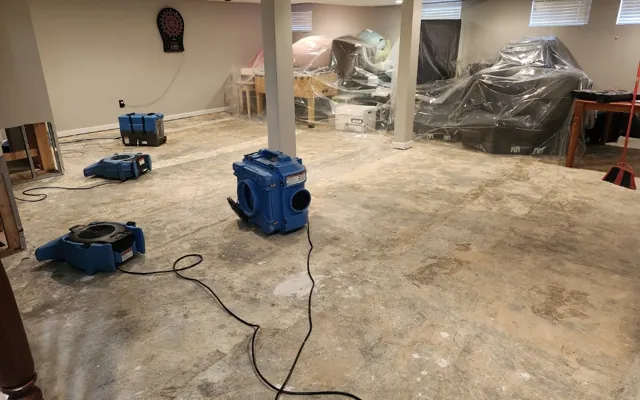
For a basement flood on the Charleston Peninsula, SC, local crews respond fast to pump out water and dry the space using IICRC-standard methods, protecting historic materials from lasting damage in this flood-prone core.

Technicians first identify the lowest impacted space and classify the water type. On the Peninsula, they trace how far it spread into finished rooms or under the house, which is critical for planning the drying of historic materials.
Using submersible pumps and extractors, the crew removes all standing water fast. Any materials saturated beyond salvage are removed, and surfaces exposed to contaminated tidal or storm water are thoroughly cleaned and sanitized.
Air movers and dehumidifiers dry the framing, slab, and original finishes. The team uses meters to verify moisture levels meet IICRC standards before any rebuild starts, ensuring the historic home's structure is protected.

Cleanup for a flooded lowest level in Charleston Peninsula generally runs about $2,000 to $8,000, depending on how much water came in, how long it sat, whether the space is finished, and how much material has to be removed and rebuilt. Contaminated storm or tidal water costs more than a clean-water event. Outside flooding is usually covered only under a separate flood policy, and the loss is documented accordingly.
Basement and lower-level flooding on the Charleston Peninsula is a recurring threat to the historic masonry rowhomes and single houses built on low ground. King tides and heavy rain can send water into these spaces, damaging original plaster and hardwood that require a careful, knowledgeable restoration approach. The Charleston Peninsula's low elevation, historic drainage, and exposure to tidal surges and heavy coastal rains make its basements and ground floors vulnerable. Aging supply lines behind plaster walls also fail, leading to interior water damage that needs prompt attention. From Charleston Peninsula, crews also cover nearby Harleston Village, Ansonborough, Wagener Terrace, Avondale, James Island, West Ashley. See every neighborhood and town on the full service area page.
See all areas servedEvery loss is photographed, measured, and logged from the first visit, so the paperwork holds up with your insurance carrier.
Technicians follow recognized IICRC drying standards and prove the work with daily moisture readings, not guesswork.
Emergency dispatch any hour of the day or night, with a real crew on the way, not a callback in the morning.
A real crew dispatched any hour, not a callback in the morning.
Trained technicians following recognized IICRC drying standards.
Truck-mounted, portable, and submersible for any size loss.
The loss is documented and billed to the carrier directly.
Cleanup costs here generally range from about $2,000 to $8,000. The final price depends on the water source, how long it sat, the extent of the finished space, and how much historic material requires careful removal versus drying in place.
Water that comes from outside, like tidal surge or storm runoff, is typically only covered by a separate flood insurance policy. Local crews document the loss accordingly to help homeowners navigate the specific claims process for these common Peninsula events.
Crews are on call 24 hours a day and can be on the way to Charleston Peninsula within the hour.
Call (843) 701-9240